
+65 8408 8454
AWG RF
  • Home
  • About Us
  • Products
    • Band Pass Filter
    • Low Pass Filter
    • High Pass Filter
    • Band Stop Filter
    • Directional Couplers
    • Power Divider
    • RF Low Noise Amplifier
    • RF Pre-selector
  • Blog
  • Contact
  • Click to open the search input field Click to open the search input field Search
  • Menu Menu

Bi-directional Coupler

Bi-directional coupler
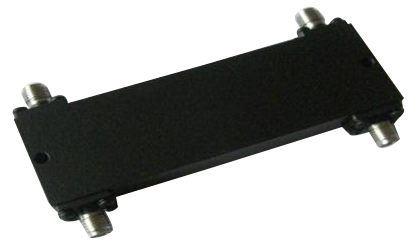
bi-directional coupler

Bi-directional coupler design

A bi-directional coupler can be designed in the same way that a “normal” directional coupler is designed. If you refer to the schematic for bi-directional coupler circuit, you will notice that the load that is connected to the isolated port is removed and becomes the coupled port for the output port. A bi-directional coupler is actually a 4-port coupler without the internal termination. In this way, the forward and reflected signals can be sampled simultaneously.

Companies like AWG Tech and Narda supplies RF bi-directional coupler worldwide.

Send us an enquiry for coupler here.

Bi-directional coupler versus dual directional coupler

A dual directional coupler is not the same as a bi-directional coupler. A dual directional coupler is constructed by cascading two three-port directional coupler back-to-back but with the internal termination facing each other. In this way, a dual directional coupler allows the forward and reflected signals to be sampled simultaneously, but the coupled ports are independent of each other.

The main difference is that the directivity of a dual directional coupler is much better than the directivity of a bi-directional coupler. This is because the directivity of a coupler is greatly affected by the termination on the isolated port.

For more information regarding our dual-directional coupler, send us an enquiry here.

For more information regarding our products or to get a customized filter designed specially for your applications at no extra cost, click on the blue button now.

Send Enquiry

Bi-directional Couplers – Tackling the Basics of the RF Component: A Short Guide

Couplers are RF and microwave components that are used in sampling the high frequency signals being transmitted; it produces two outputs by just sampling a single signal as the input. The two outputs produced are known to be as the normal output and the other one to be the paired output. There are different types of couplers that can be used in any system; a prime example of one is the directional coupler. This is a four-port component that has an input (Port 1) and output port (Port 2) that can carry a high amount of high frequencies, and the remaining ports (Ports 3 and 4) can only carry low signals.

However, there is another type of directional coupler that can perform double the task; that would be the dual directional coupler (A.K.A the bi-directional coupler). This coupler is made up of two directional couplers that are connected in the series; however, they are placed in the opposing direction. Another definition for this coupler is it’s a directional coupler that has one main line and has a pair of secondary lines meant for pairing frequency signals.

Generally speaking, the dual directional coupler has the same components as the single directional coupler. However, as mentioned above, they get input only from a single main line and the component simultaneously will examine and pair these signals for them to be turned into outputs.

The Basic Configurations of a Single Directional Coupler

Oftentimes, other people will think that the dual directional coupler will have a different configuration with that of the single directional coupler. As a matter of fact, the configurations of the dual directional coupler are exactly the same as the single directional coupler due to it being manufactured by using two single directional couplers.

The configuration of a single directional coupler has two parallel transmission line that stretches over a length of one-quarter wavelength, it responds with the operation’s core frequency. The main and secondary lines are apart with a calculated physical distance which identifies the coupling factor of the component.

The physically closer the lines are with one another, the more power will be welcomed on the secondary line. Plus, the term “coupling” signifies the amount of input power sampled to the coupled port and is usually defined as 10 times ratio of Incident Power and Forward Power.

The Main Difference between Single and Dual Directional Couplers

As mentioned over and over, single and dual directional coupler is made of the same component, that’s true. However, there is something that stands out in the circuit design of the dual directional coupler.

The single directional coupler are linked together back-to-back and shares a common mainline for the sampling of frequency signals and thus producing two outputs, that makes it a dual directional coupler (or a bi-directional coupler). However, these ports have a high amount of isolation compared to the single directional coupler. This is critical for the accuracy of the reflectometer set-ups that will, at the same time, test the input power to a device. On the other hand, it can load to provide signal ratios for the purpose of identifying the return loss in decibels.

Product Enquiry Form

4 + 4 = ?

Contact Us - AWG TECH

AWG Tech Pte. Ltd.
21 Tan Quee Lan Street #02-04 Heritage Place
Singapore 188108
CO Reg: 201204264E
Phone: +65 9763 7032
Website: http://www.awgrf.com
Email: info@awgrf.com

Products

  • Home
  • Products
    • Band Pass Filter
      • HF-Band Band Pass Filter
      • VHF-Band Band Pass Filter
      • UHF Band Pass Filter
      • L-Band Bandpass Filter
      • S-Band Bandpass Filter
      • C-Band Bandpass Filter
      • X-Band Bandpass Filter
      • Ku-Band Band Pass Filter
    • Low Pass Filter
      • HF-Band LC Low Pass Filter
      • UHF Band Low Pass Filter
      • VHF-Band Low Pass Filter
      • L-Band Low Pass Filter
      • S-Band Low Pass Filter
      • C-Band Low Pass Filter
      • X Band Low Pass Filter
      • Ku Band Low Pass Filter
    • High Pass Filter
      • HF-Band High Pass Filter
      • VHF-Band High Pass Filter
      • UHF-Band High Pass Filter
      • L-Band High Pass Filter
      • S-Band High Pass Filter
      • C-Band High Pass Filter
      • X-Band High Pass Filter
      • Ku-Band High Pass Filter
    • Band Stop Filter
      • HF-Band Bandstop filter
      • UHF-Band Bandstop Filter
      • L-Band Bandstop Filter
      • S-Band Bandstop Filter
      • C-Band Bandstop filter
    • Directional Couplers
      • Directional Coupler 5-1000 MHz
      • L-Band Directional Coupler
      • Wideband Coupler
      • Bi-directional Coupler
      • Hybrid Coupler
    • Power Divider
  • Contact
  • About Us

AWG TECH PTE LTD

1 Coleman Street #10-06
The Adelphi Singapore 179803
CO Reg: 201204264E
Phone: +65 8408 8454 Fax: +65 6333 0635
http://www.awgrf.com
Search Search

Contact Us Today

AWG Tech Pte. Ltd.
21 Tan Quee Lan Street #02-04
Heritage PlaceSingapore 188108
CO Reg: 201204264E
Phone: +65 9763 7032
http://awgrf.com

Pages

  • 1 To 18GHz Power Divider
  • 1-6GHz 4W Power Amplifier
  • 10 dB Directional Coupler
  • 2-way Power Divider
  • 20 dB directional coupler
  • 3 Port Directional Coupler
  • 3-way Power Divider
  • 30dB Directional Coupler
  • 4 Port Directional Coupler
  • 4-way power divider
  • 450MHz Band Pass Filter
  • 546 MHz Band Pass Filter
  • 6 – 18 GHz Power Divider
  • 6 way power divider
  • 8 way power divider
  • About Us
  • Band Pass Filter
  • Band Pass Filter for UHF Transmitter
  • Band Stop Filter
  • Bi-directional Coupler
  • Blog
  • C Band Interference Elimination Filter
  • C-Band Bandpass Filter
  • C-Band Bandstop filter
  • C-Band Cavity Filter
  • C-Band Directional Coupler
  • C-Band High Pass Filter
  • C-Band Low Pass Filter
  • C-Band Power Divider
  • Cavity Filter Manufacturer
  • Contact
  • Directional Coupler 5-1000 MHz
  • Directional Couplers
  • FM-Band Bandpass Filter
  • FM-Band High Pass Filter
  • Front End Preselector
  • GSM Cavity Filter
  • HF Preselector
  • HF-Band Band Pass Filter
  • HF-Band Bandstop filter
  • HF-Band High Pass Filter
  • HF-Band LC Filter
  • HF-Band LC Low Pass Filter
  • HF-Band Low Pass Filter
  • High Pass Filter
  • Hybrid Coupler
  • Ku Band Low Pass Filter
  • Ku-Band Band Pass Filter
  • Ku-Band Cavity Filter
  • Ku-Band Directional Coupler
  • Ku-Band High Pass Filter
  • Ku-Band Power Divider
  • L-Band Bandpass Filter
  • L-Band Bandstop Filter
  • L-Band Cavity Filter
  • L-Band Directional Coupler
  • L-Band High Pass Filter
  • L-Band Low Pass Filter
  • L-Band Power Divider
  • Low Pass Filter
  • Low Pass Filter for UHF Transmitter
  • Power Divider
  • Pre-selector for SDR
  • Pre-selector Switched Filter Bank
  • Products
  • RF Component Company
  • RF Low Noise Amplifier
  • RF Pre-selector
  • S-Band Bandpass Filter
  • S-Band Bandstop Filter
  • S-Band Cavity Filter
  • S-Band Directional Coupler
  • S-Band High Pass Filter
  • S-Band Low Pass Filter
  • S-Band Power Divider
  • Suspended Stripline Filter
  • UHF Band Low Pass Filter
  • UHF Band Pass Filter
  • UHF Preselector
  • UHF-Band Bandstop Filter
  • UHF-Band High Pass Filter
  • UHF-Band LC Filter
  • VHF Band LC Low Pass Filter
  • VHF Pre-selector
  • VHF-Band Band Pass Filter
  • VHF-Band High Pass Filter
  • VHF-Band LC Bandpass Filter
  • VHF-Band Low Pass Filter
  • Wideband Coupler
  • Wideband Power Divider
  • Wideband Preselectors
  • X Band Low Pass Filter
  • X-Band Bandpass Filter
  • X-Band Cavity Filter
  • X-Band Directional Coupler
  • X-Band High Pass Filter
  • X-Band Power Divider

Categories

  • Uncategorized
© Copyright - AWG RF - powered by Enfold WordPress Theme
  • Link to X
  • Link to Dribbble
Scroll to top Scroll to top Scroll to top

This site uses cookies. By continuing to browse the site, you are agreeing to our use of cookies.

OKLearn more

Cookie and Privacy Settings


How we use cookies

We may request cookies to be set on your device. We use cookies to let us know when you visit our websites, how you interact with us, to enrich your user experience, and to customize your relationship with our website.

Click on the different category headings to find out more. You can also change some of your preferences. Note that blocking some types of cookies may impact your experience on our websites and the services we are able to offer.

Essential Website Cookies

These cookies are strictly necessary to provide you with services available through our website and to use some of its features.

Because these cookies are strictly necessary to deliver the website, refusing them will have impact how our site functions. You always can block or delete cookies by changing your browser settings and force blocking all cookies on this website. But this will always prompt you to accept/refuse cookies when revisiting our site.

We fully respect if you want to refuse cookies but to avoid asking you again and again kindly allow us to store a cookie for that. You are free to opt out any time or opt in for other cookies to get a better experience. If you refuse cookies we will remove all set cookies in our domain.

We provide you with a list of stored cookies on your computer in our domain so you can check what we stored. Due to security reasons we are not able to show or modify cookies from other domains. You can check these in your browser security settings.

Google Analytics Cookies

These cookies collect information that is used either in aggregate form to help us understand how our website is being used or how effective our marketing campaigns are, or to help us customize our website and application for you in order to enhance your experience.

If you do not want that we track your visit to our site you can disable tracking in your browser here:

Other external services

We also use different external services like Google Webfonts, Google Maps, and external Video providers. Since these providers may collect personal data like your IP address we allow you to block them here. Please be aware that this might heavily reduce the functionality and appearance of our site. Changes will take effect once you reload the page.

Google Webfont Settings:

Google Map Settings:

Google reCaptcha Settings:

Vimeo and Youtube video embeds:

Other cookies

The following cookies are also needed - You can choose if you want to allow them: